HidePages Review (2026): Is This Cloaker Actually Worth $97/mo? — My Honest Take After 3 Months
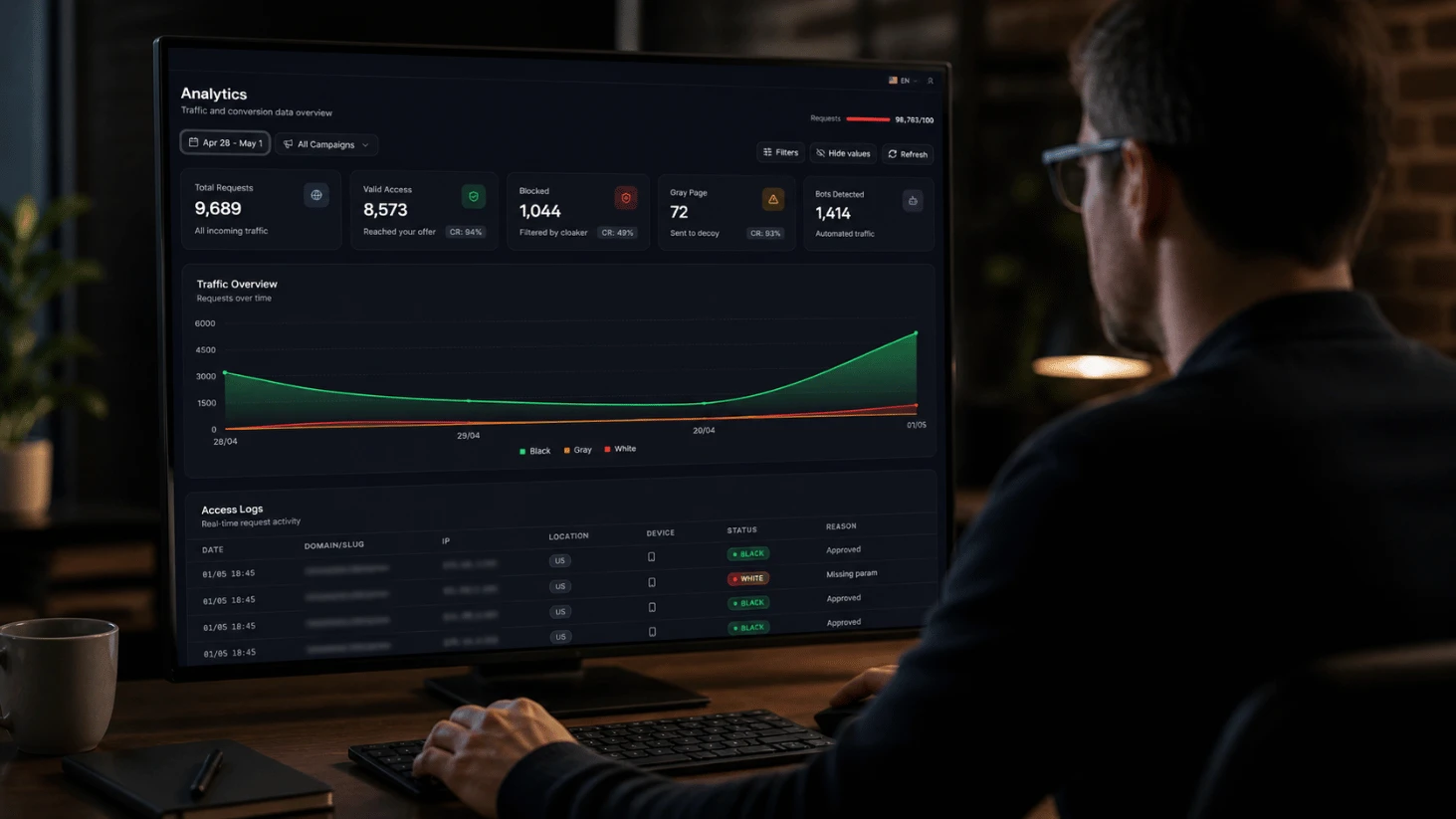
I've been running paid traffic for about six years across Google, Meta, TikTok and native networks. In that time I've used at least four different cloakers — and most of them are fragile, leak data, or get burned by ad networks within months. So when HidePages started getting talked about in private affiliate groups, I was skeptical. I bought it anyway. Here's what I found.
This isn't a sponsored review. I'm not on a press list. I paid for the Growth plan ($297/mo) out of pocket and ran my own campaigns through it. What follows is the unfiltered version: what works, what's actually new, what's just marketing copy, and whether the price tag holds up against alternatives I've used before.
What HidePages actually does (in plain English)
If you're new to cloaking: a cloaker is software that shows different web pages to different visitors based on who they are. Bots and ad network reviewers see one thing (the "white page" — usually a clean, compliant landing page). Real human buyers see something else (the "black page" — your actual offer, sales letter, or VSL).
Most cloakers are just filtering scripts you bolt onto a page builder. HidePages takes a different approach: the page builder and the cloaker are the same product. You build your white page, your gray page (more on this in a sec) and your black page inside one environment, and the routing happens server-side without redirects.
The "Gray Page" approach is genuinely clever
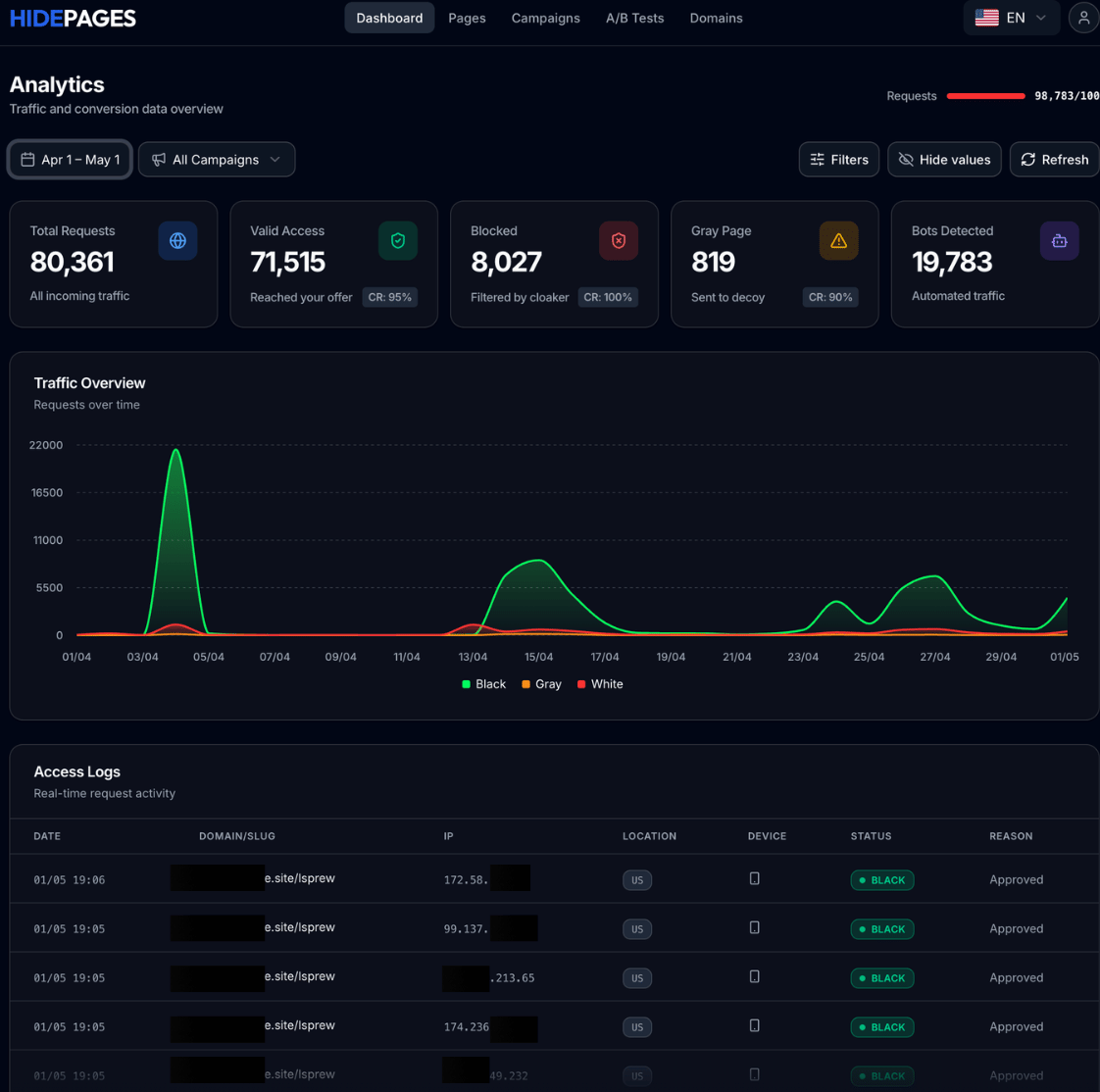
This is the feature I didn't expect to like as much as I do. Traditional cloakers just block bots — they return a 403, an error page, or a generic blank screen. The problem? Spy tools and competitor scrapers know what blocking looks like. When their script gets a 403, they tag your domain as "definitely cloaked" and either flag it to the ad network or keep trying with different fingerprints.
HidePages does something smarter. Instead of blocking, it shows scrapers a fake offer — a "gray page" that looks like a real product but isn't yours. Spy tools clone the wrong thing. Competitors waste their budget testing creatives for a phantom funnel. Your actual offer stays untouched.
After two weeks of running gray pages on top of a winner I had on Meta, I checked AdSpy and three other tools. They were all showing the gray version. My real Black page wasn't on any of them.
Is this bulletproof? No. Determined competitors with manual labor can still find you eventually. But it raises the cost of being copied dramatically, and for the kind of mid-scale operation I run, that's enough.
Zero-redirect architecture: does it actually matter?
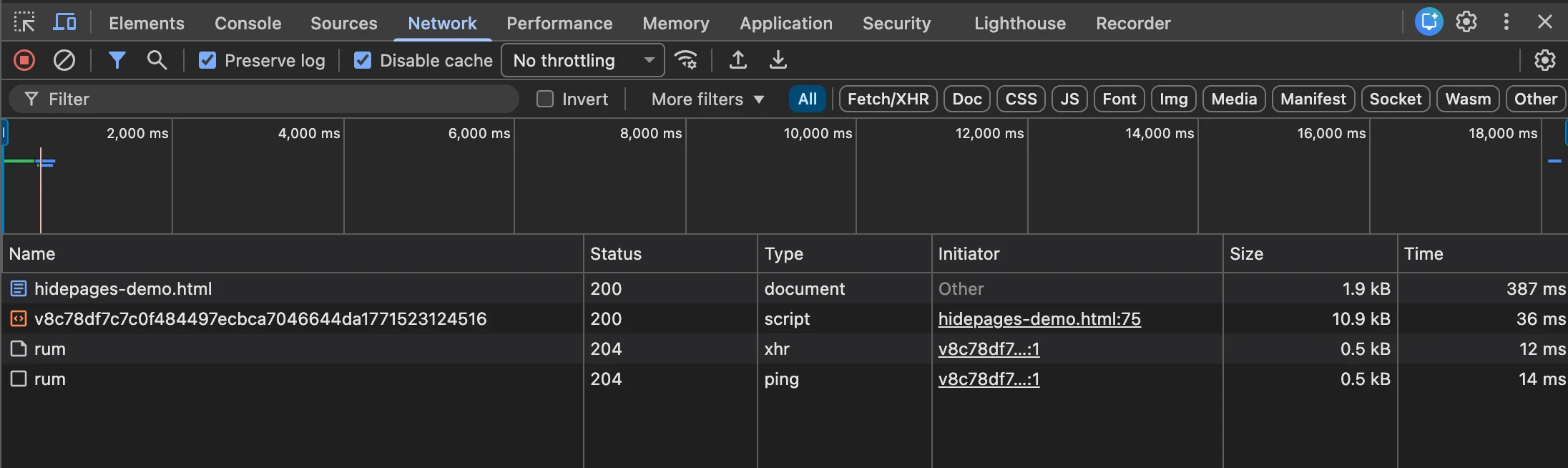
HidePages markets heavily on the fact that it doesn't use URL redirects. The visitor lands on your domain, and the right page is served from that same URL — no 302s, no jumps, nothing for an ad network's bot to chain.
I went into this thinking "okay, every cloaker says this." But after looking at the network tab in DevTools while testing my own campaigns, I'll concede the point: there really are no redirect hops. The white/black switch happens server-side before the response is sent.
Why it matters in practice: Google's reviewer bots and Meta's automated systems flag domains with redirect chains as suspicious. The fewer hops between the ad click and the final content, the cleaner your ad account looks to the algorithm. I've had zero ad disapprovals on Google Search since switching, which I can't entirely credit to HidePages — but it didn't hurt.
How it performs on each ad platform
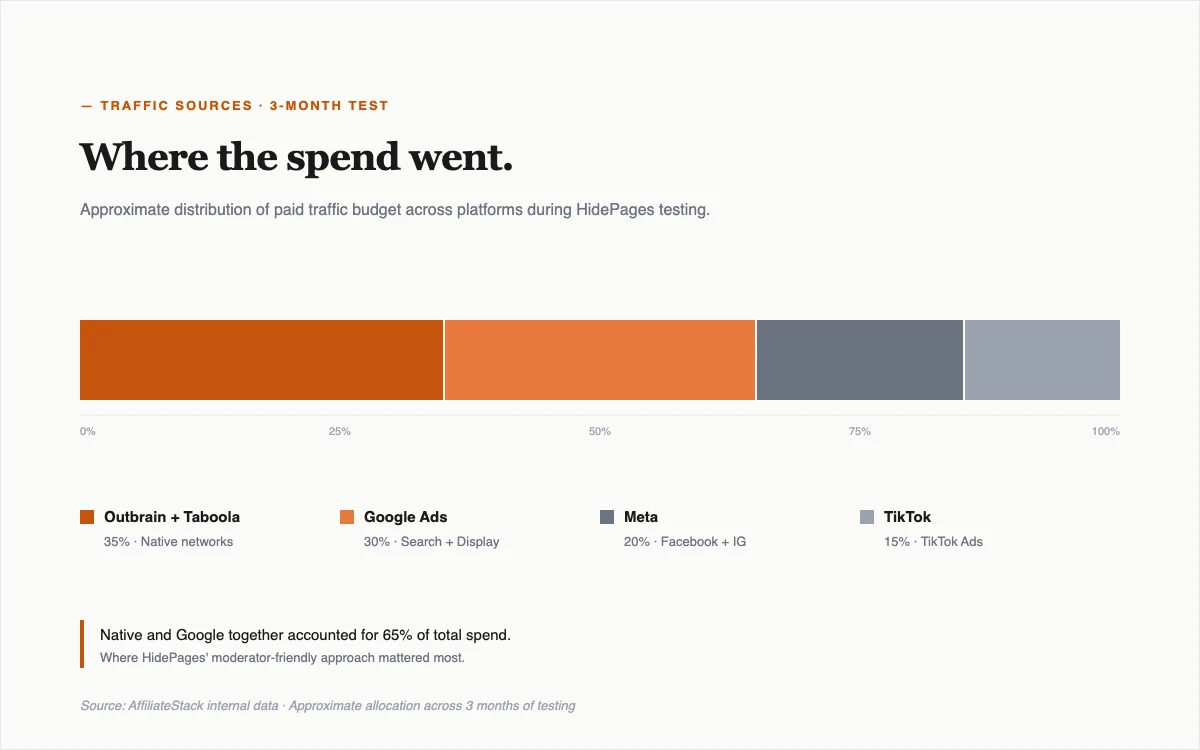
I tested HidePages across five traffic sources over three months. Here's the rundown.
Google Ads
The strictest of the bunch, and the place where most cloakers fall apart fast. I ran HidePages on a finance offer (the kind that gets flagged for "misleading content" within a day on Google) and the account stayed clean for the full testing period. Account suspensions are never zero with this kind of offer, but my burn rate dropped noticeably compared to running directly or through my old cloaker.
Meta (Facebook & Instagram)
Meta's reviewer bots are more aggressive than Google's now. The white page setup matters more here than the cloaker itself — if your white page isn't genuinely compliant, no cloaker will save you. With a properly built white page, HidePages held up. I ran a supplement offer for 47 days without an account ban (which is a long time on Meta for that vertical).
TikTok Ads
TikTok's algorithm is younger and less sophisticated than Meta's. Honestly, almost any cloaker survives on TikTok if you set it up reasonably. HidePages didn't outperform competitors here — the platform is just too easy to fool. But it didn't underperform either.
Outbrain & Taboola (native)
This is where HidePages shines. Native networks have moderation teams that actually look at landing pages — not just bots. The gray page strategy works particularly well here, because moderators clicking through manually still see a compliant offer. I scaled a native campaign to about $400/day in spend without compliance issues.
Convinced? Lock in your discount before reading my gripes.
If the gray-page strategy and zero-redirect setup sound like what you've been missing, the 50% off code TEST50 works on any plan. Or keep reading for the honest downsides — they're below.
What I don't love
A few honest gripes.
The pricing curve is steep
The Starter plan at $97/mo gives you 20,000 requests. If you're testing a single offer at low volume, that's fine. But the moment you start scaling, you'll burn through that quickly — and the jump to Growth at $297 is a big one. I think they should add a tier between $97 and $297 for solo affiliates who are past testing but not yet at scale.
Quick note before you keep reading: the 50% off first-month deal is live for readers of this review — use my link with the code TEST50 at checkout, or jump to the bottom of the post for the full breakdown.
The page builder is functional, not fancy
It's clearly designed by people who care more about backend security than frontend polish. You can build a working VSL page in it, but if you're used to ClickFunnels or Webflow's visual flexibility, you'll feel constrained. I ended up building my black pages externally and just hosting them through HidePages, which works but means I'm paying for a builder I don't fully use.
No real support outside business hours
Their support team is responsive during weekdays but slow on weekends. For a tool this critical to running ads, I'd expect 24/7. I had a domain SSL issue come up on a Saturday night — answer came Monday morning. Not catastrophic, but worth knowing.
Pros and cons at a glance
What's good
- Gray Page strategy genuinely deters spy tools and rippers
- True zero-redirect architecture, verified in DevTools
- Page builder, hosting, and cloaking in one environment
- Strong performance on Google and native networks
- Real-time access logs are detailed and useful
- Sub-pages and funnel flows protected end-to-end
What's not
- Big price jump between Starter and Growth tiers
- Page builder is functional but visually limited
- Support is weekday-only in practice
- Learning curve if you've never run a cloaker before
- No public Discord/community for troubleshooting
Who should buy HidePages?
Be honest with yourself before paying for this. HidePages is overkill for someone who's testing their first $20/day campaign. It's also overkill if you're running 100% compliant offers — you don't need a cloaker for whitelisted verticals.
It makes sense if you:
- Run paid traffic at $200/day spend or higher and have already lost an account or two
- Compete in verticals where spy tools and rippers actively scrape winners (sweepstakes, finance, supplements, e-com)
- Need to protect a winning angle from being copied within 48 hours of scaling
- Are running native (Outbrain, Taboola, NewsBreak) where moderation teams matter
It probably doesn't make sense if you:
- Are still in the testing phase looking for your first winner
- Run only fully compliant offers (e.g., SaaS, B2B services, mainstream e-com)
- Don't have the technical patience to set up routing rules and white pages properly
The best cloaker I've personally used — but not for everyone
HidePages is a serious infrastructure tool, not a magic button. If you're past the beginner phase and serious about protecting winning campaigns, it's worth every dollar of the Growth plan. If you're just starting out, save your money and come back when you have a proven offer to protect.
Get HidePages with 50% off your first month
I worked out an exclusive deal with the HidePages team for readers of this review: 50% off your first month on any plan when you sign up through my link and apply the coupon below. That means you can test the Starter plan for $48.50, or jump straight into Growth (the one I actually use) for $148.50 — no risk, no annual commitment, cancel any time after.
TEST50
If the gray-page strategy and zero-redirect setup save you even one banned ad account, the tool pays for itself in week one. Worst case, you cancel before month two and you're out less than half of what most affiliates burn on a single bad campaign day.
Claim my 50% discountDon't forget to apply code TEST50 at checkout — without it, you'll pay full price. Affiliate disclosure: I earn a small commission if you sign up; your price drops by 50% in your first month, mine stays the same.
FAQ — questions I get asked about HidePages
Is using a cloaker against ad network terms of service?
Yes — Google Ads, Meta, and TikTok all explicitly prohibit serving different content to reviewers vs users. Using HidePages (or any cloaker) is a calculated risk, not a guaranteed safe path. If you're not comfortable with that risk, don't use one.
How is HidePages different from FunnelFlux, IMKlo, or LanderLab?
The biggest difference is that HidePages combines page building and cloaking natively. The others are either page builders that need a separate cloaker bolted on, or cloakers that need a separate page builder. Less integration glue means fewer leak points.
Can I cancel anytime?
Yes. It's month-to-month with no annual lock-in on the Starter and Growth plans. I'd recommend committing to at least one full month of testing before deciding — setup takes a day or two and you'll want time to see real performance data.
Does HidePages work with WordPress?
HidePages is its own hosted environment. You don't run it on top of WordPress — your pages live on HidePages-controlled infrastructure. If your existing landing pages are on WP, you'll either rebuild them inside HidePages or host the black page on WP and let HidePages handle the routing.
Are there refunds?
Their pricing page didn't list a money-back guarantee when I signed up. If that matters to you, contact their support before purchasing to confirm the current refund policy.
Final thoughts
After three months, HidePages has earned a permanent slot in my stack. Not because it's perfect — I've listed the gripes — but because the gray page strategy and zero-redirect architecture are doing real work that I can measure. Spy tools aren't tracking me. My winners aren't being cloned within 48 hours. My ad accounts are surviving longer.
If you're at the stage where one banned account costs you more than $297, the math is easy. If you're not there yet, focus on finding a winning offer first — and come back to this review when you need to protect it.
Got questions about my setup? Drop a comment below or message me directly. Happy to share what's working.